Chrome extension · free On the Chrome Web Store
Every so often one story is on every front page for days, and you have seen enough of it. Underhyped takes those stories off the page and puts something smaller in their place: a small game from a small studio, with a picture, who made it and a few lines about it. The first topic is GTA 6, which came out on 19 November 2026 and was all over DR, TV 2, BT, Politiken and Berlingske.
Topics
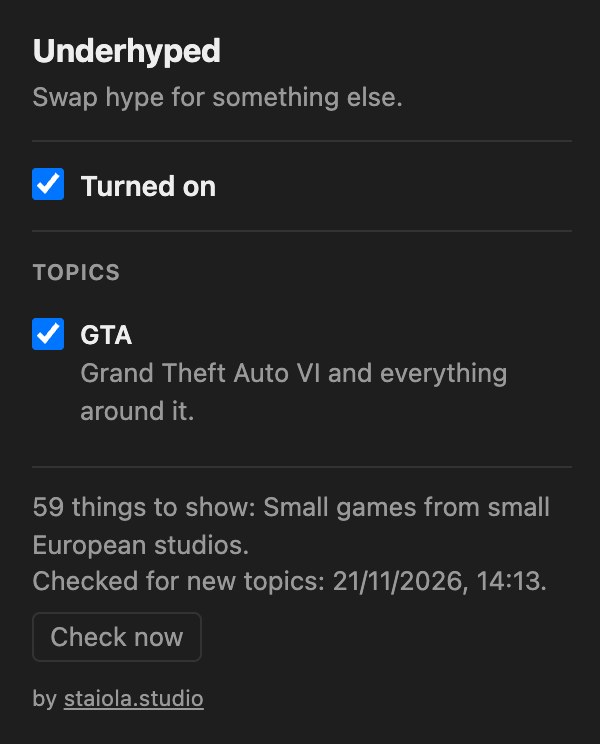
Underhyped is for whichever story is filling the front pages. GTA 6 is the first topic, because it came out on 19 November 2026. Next month it may be a royal wedding, a football transfer or a celebrity, and the cards will replace that instead.
The topics and the games are not built into the extension. They are a public file on GitHub that it checks when Chrome starts and every six hours, so a new topic can arrive without a new version. The popup has a switch for each one, and a topic I mark as no longer current turns itself off unless you have turned it on yourself.
The hard part of a new topic is the words, not the code. "GTA" means one thing. "Wedding" means thousands, so a topic has to be built from names and fixed phrases and tried on real front pages before it goes out.
Swapping
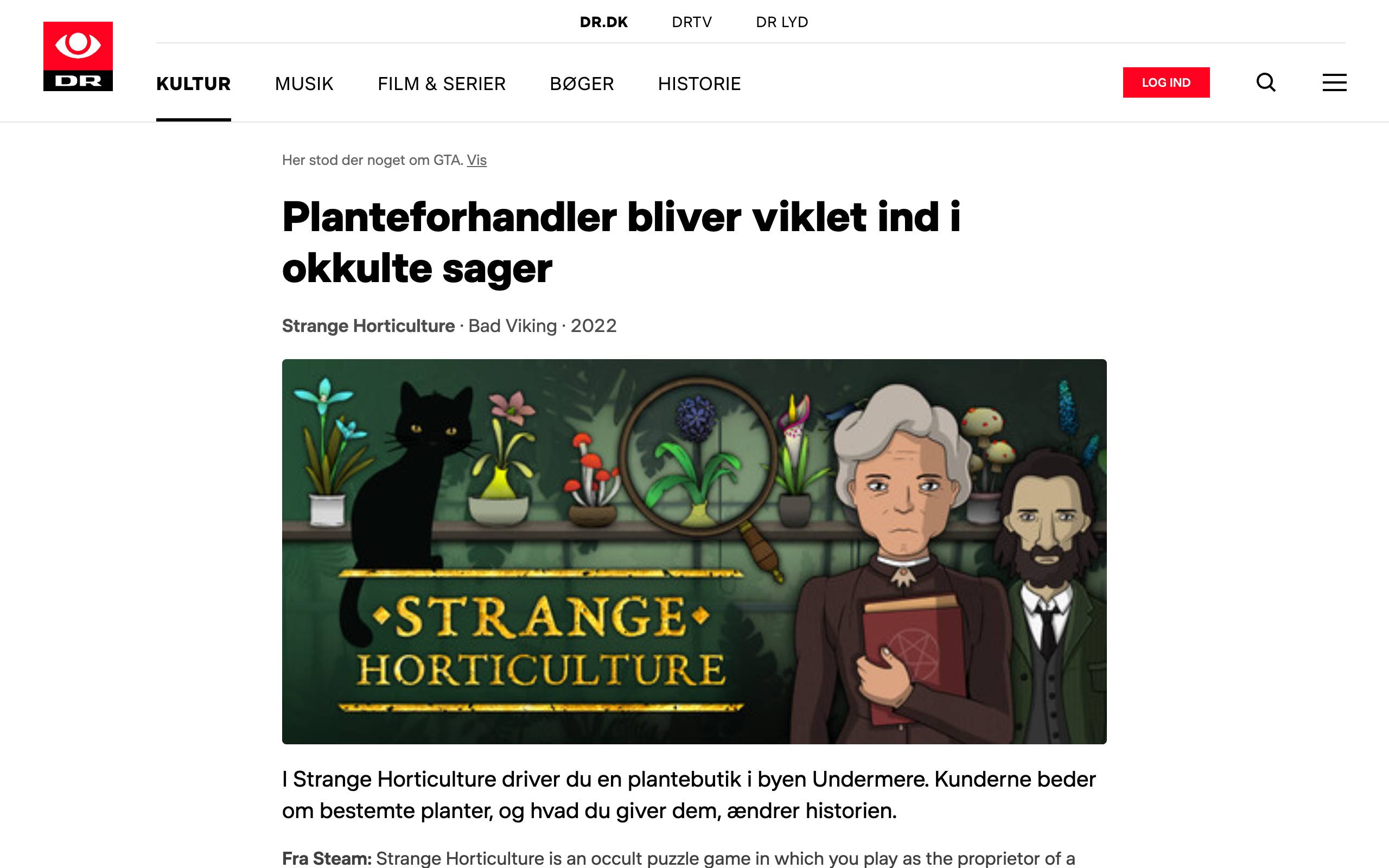
It looks for the topic in the text of the page and in the addresses of the links, because some papers write headlines like "Hele verden i svime" and only say GTA in the URL. When it finds one, it works out which box on the page is that one teaser and replaces the whole box: picture, headline, video if there is one. The card borrows the site's own typeface and text colour, so on DR it looks like DR and on Polygon like Polygon.
Every card says what was there. For GTA that is "Her stod der noget om GTA. Vis", or "This was about GTA. Show" on English pages. Click it and the original comes back. Click anywhere else on the card and the game opens on Steam.
The games
I picked them by hand, all from small European studios: nine Danish, nineteen from the rest of the Nordics, and thirty-one from Germany, the Netherlands, the UK, France and Latvia. The less known games come up a little more often than the well-known ones, and on .dk sites the Danish and Nordic ones get a push.
Each game has a Danish headline and a couple of sentences, written in the shape of a news teaser, so it sits in the slot without looking out of place. They only say what is on the game's Steam page or is well documented, with no made-up quotes. On pages that aren't Danish, the card shows the game's English description from Steam instead.
For a day there were also fourteen adventure classics in there, Monkey Island and Loom among them. I took them out again. They were big once, and the point is to lift smaller things up.
Limits
What is kept
What does go over the internet: the topic and game lists, fetched from GitHub, and the game pictures, loaded from Steam's image servers when a card is shown. The full version is in the privacy policy and terms.
Under the hood
A content script walks the page's text and links looking for the topic's words and URL fragments, then climbs from the match to the largest box that is still one teaser: one link target, one headline, no run of paragraphs. What is in that box is hidden and a card is drawn in a shadow root inside it, so the site's CSS can't reach it. The game data comes from Steam's public store pages, gathered by a Python script; the Danish texts are written by hand. A background worker fetches the topic and game lists from GitHub and keeps them in the browser.
Try it
Chrome and Brave on a computer, where I tested it, and Edge, which installs it from the same store. It runs by itself on the 29 news and games sites in the list above, and on any other page when you press "Run on this page" in the popup. Not on phones.